Automated License Plate Readers (ALPR)
The Barrington Hills Police Department uses ALPR technology to capture objective evidence while maintaining a strong commitment to protecting individual privacy. Our use of this technology includes: Real-time alerts to identify hotlist vehicles, including those connected to wanted criminals, stolen vehicles, and vehicles listed in AMBER or SILVER Alerts. Retroactive search to assist in solving crimes after they occur. To ensure transparency and accountability, the Barrington Hills Police Department has established policies and procedures governing the use of this technology.
How ALPR Technology Works
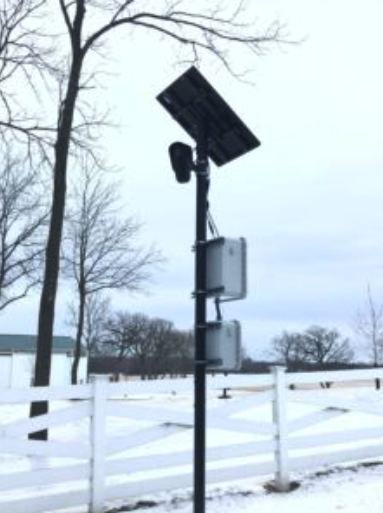
The ALPR system captures computer-readable images of license plates and vehicles. The data collected contains the date, time, and location where the photo was captured. There is no personally identifiable information contained in this data. The system does NOT capture or store images of drivers or passengers, nor information associated with a vehicle’s registration.
The ALPR system compares the license plate data against a list maintained by the State of Illinois and the Barrington Hills Police Department. This list contains license plate values associated with certain vehicles, such as stolen motor vehicles; vehicles associated with missing persons, and vehicles entered into the list as being associated with criminal activity. If there is a match on a vehicle, the system alerts police dispatch and officers in real time through the in-car computer system.
It is important to note that although the term ALPR includes the term automated when an alert is generated, an officer will independently validate that the system has accurately read the license plate, that the plate observed matches the alert, and that the alert is still active.
Frequently asked questions
How long is data stored?
All ALPR data will be retained for 30 days. After 30 days, ALPR data is purged unless it has become evidence in a criminal investigation or is subject to a lawful order to produce such records. Data will not be shared or sold with third parties.
Do you share the data?
No. Data is for law enforcement purposes only and will not be sold or shared with third parties.
Do you share data with other law enforcement agencies?
ALPR information may be shared with other authorized law-enforcement agencies within Illinois, when permitted by law and when appropriate for a legitimate law-enforcement purpose, such as an active investigation or locating a stolen, missing, or endangered person.
Illinois law places specific restrictions on the sharing of ALPR information, including restrictions concerning certain uses by out-of-state law-enforcement agencies.
As required by 625 ILCS 5/2-130 of the Illinois Vehicle Code, ALPR data may not be released to any other authorized and verified law enforcement officials for the purpose of investigating or enforcing a law that:
- Denies or interferes with a person’s right to choose or obtain reproductive health care services or any lawful health care services as defined by the Lawful Health Care Activity Act; or
- permits the detention or investigation of a person based on the person’s immigration status
Can data be requested through the Freedom of Information Act (FOIA)?
ALPR information is subject to applicable Illinois law governing public records and confidentiality. Illinois law specifically provides that ALPR information shall be held confidentially to the fullest extent permitted by law.
Is ALPR technology facial recognition?
No. ALPR technology is designed to identify vehicles and license plates. It is not facial recognition.